Costs, Intervals, Battery Care, and Differences from Thermal Vehicles
Maintaining an electric vehicle (EV) raises many questions—whether you are already an EV driver or currently in the decision-making phase before a purchase. Often portrayed as “maintenance-free,” EV upkeep actually follows specific rules, particularly regarding the battery, onboard electronics, and safety. The fact is: an electric car does not completely skip service, but the maintenance is different—generally less frequent, mechanically simpler, and more cost-effective.
In this article, we review EV maintenance, compare it to internal combustion engine (ICE) vehicles, discuss real-world costs across Europe, and explain why entrusting your vehicle to experts is vital for protecting your high-voltage battery warranty.
Does an electric car really require less maintenance?
Yes. The simplified mechanical design is the biggest advantage. An electric motor has significantly fewer moving parts, which drastically reduces wear and the risk of breakdown. The following points are completely eliminated:
- Engine oil changes & oil filters
- Timing belt replacement
- Spark plug changes
- Clutch & gearbox repairs (in most models)
- Exhaust system & catalytic converters
This mechanical simplification leads to faster service times. However, certain components still require attention to ensure longevity.
What still needs to be maintained on an EV?
Even without a thermal engine, classic checks remain essential:
- Tires: Due to the heavy weight of the battery and instant torque, EV tires tend to wear out faster.
- Chassis & Suspension: European safety statistics show that suspension components in heavy EVs are subject to higher stress compared to lighter gasoline cars.
- Brakes: This is a unique case. Thanks to regenerative braking (using the motor to slow down and recover energy), mechanical brakes are rarely used. Paradoxically, this often leads to corrosion on the brake discs due to lack of use.
- Fluids: Brake fluid (usually every 2 years) and cabin air filters must be replaced as usual to maintain safety and air quality.
Frequency: When should an EV go to the workshop?
There is no single EU-wide rule, as intervals depend heavily on the manufacturer:
- Fixed Intervals: Often every 2 years (common for many European brands).
- Mileage-based Intervals: Frequently every 15,000 to 30,000 km (common for Asian manufacturers).
- Condition-based: Some brands (like Tesla) do not have “mandatory” annual service but recommend periodic checks of filters and brake fluid.
Important for European Owners: To avoid voiding the typical 8-year high-voltage battery warranty, it is crucial to follow the manufacturer’s service schedule precisely, regardless of which EU country you are in.
The Battery: The Heart of the Vehicle
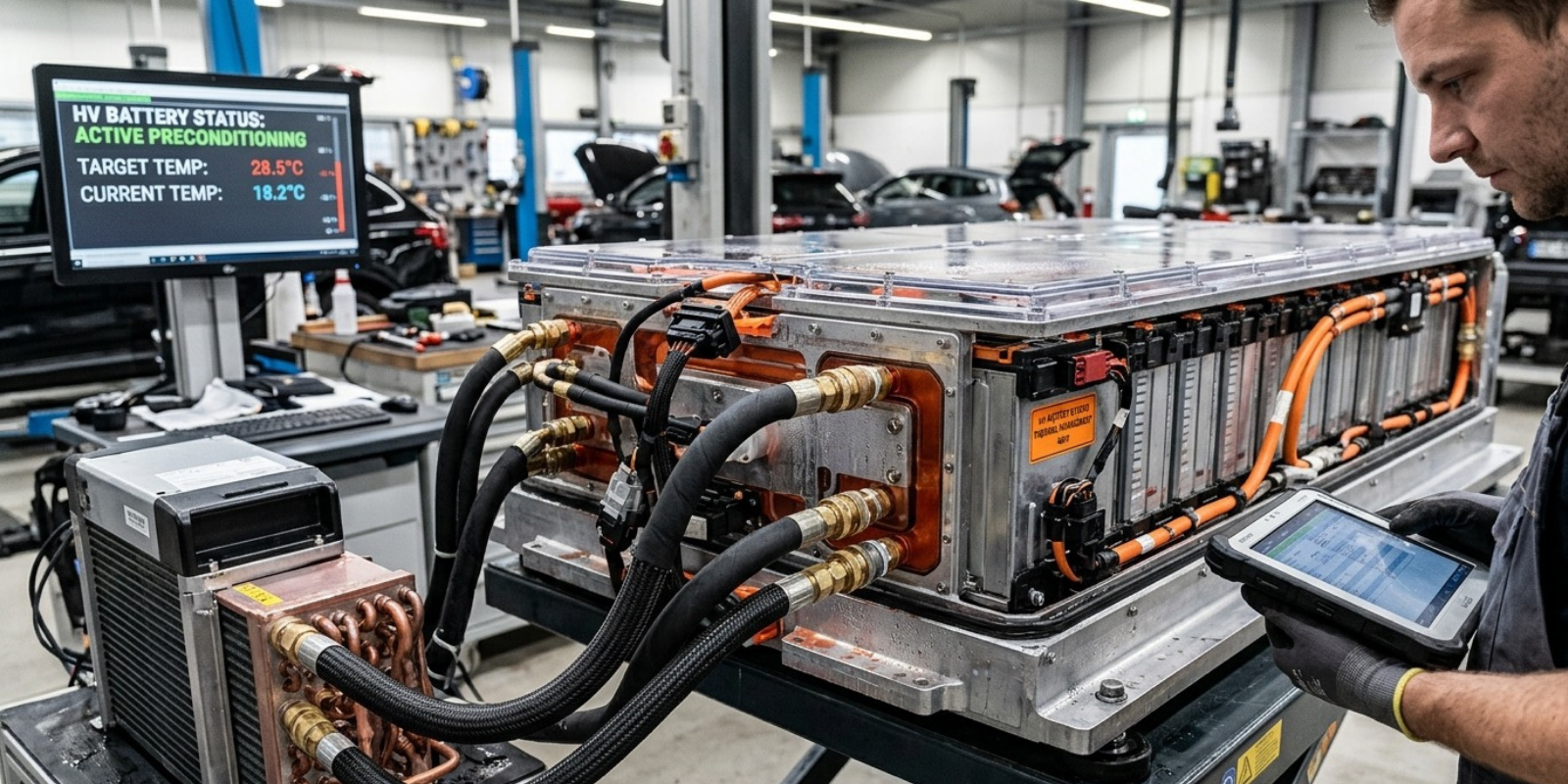
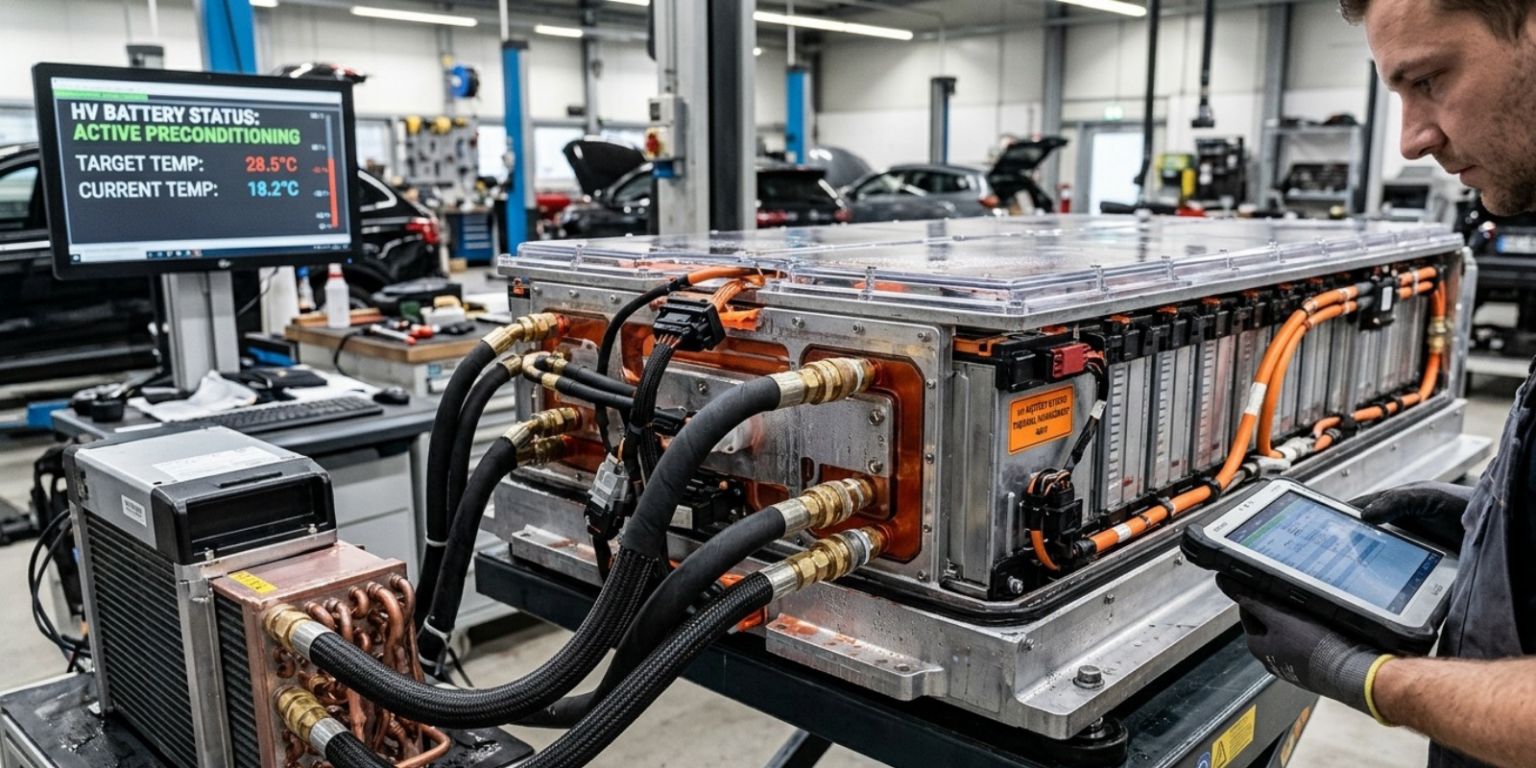
The battery requires no mechanical maintenance but is subject to rigorous electronic monitoring. During a service, technicians perform:
- Electrical Diagnostics: Checking high-voltage cabling and insulation.
- SOH Analysis (State of Health): Reading the remaining capacity of the battery.
- Cooling System: Checking the coolant used for the battery’s thermal management.
Expert Tip: If you plan to sell your EV privately, an independent battery certificate from independent providers is highly recommended. It provides a more transparent “health report” than the internal manufacturer protocol and increases the resale value across the European market. Just search the internet and you’ll find something nearby.
Cost Analysis: How much is maintenance per year?
On average, EV maintenance in Europe is about 30% cheaper than for ICE vehicles. However, labor rates for “High-Voltage Certified” technicians can be slightly higher in some regions because of the specialized training and safety equipment required.
- Annual Inspection Costs: Approx. €150 to €300 (excluding wear parts like tires).
- Comparison to Thermal Vehicles: Costs usually range from €400 to €700, primarily driven by oil changes and complex exhaust/emission systems.
Financial Incentive: Many European countries offer incentives that can offset these costs. In some regions, “Carbon Credits” or EV-specific grants can effectively cover your annual service fees.
Can any workshop maintain an EV?
Basic mechanical work (brakes, tires, suspension) can technically be done by any workshop. However, as soon as work involves high-voltage components, EU safety regulations (such as ECE-R100) require technicians to be specifically certified. It is always advisable to check if a workshop is “EV-certified” before booking an appointment.
Conclusion: More Eco-friendly and Cost-effective
EV maintenance is cleaner (no waste oil) and generally less stressful in the long run. By practicing good habits—keeping the battery charge between 20% and 80% and occasionally “clearing” the brakes—owners can ensure their vehicle remains reliable and holds its value for many years.
Service Tip “Brake Clearing”: Occasionally, on a safe and clear road, shift the car into Neutral (N) and brake firmly. This engages the mechanical brakes instead of the motor, removing surface rust from the discs that could otherwise lead to a failure during mandatory safety inspections.
Comparison Table: Maintenance at a Glance
Criterion | Electric Vehicle (BEV) | Thermal Vehicle (ICE) |
Oil Change / Filter | ☑ No | ☑ Yes |
Brake Wear | Very low (Regeneration) | High |
Brake Issues | Corrosion due to underuse | Classic wear and tear |
Chassis / Tires | Increased stress (Weight) | Normal |
Software Updates | Central to car functions | Mostly engine management |
Safety Inspections | Focus on axles & brakes | Focus on emissions & leaks |
Annual Costs (Avg.) | €150 – €300 | €400 – €700 |
Helpful Sources & Links
European Automobile Manufacturers’ Association (ACEA): Maintenance and Innovation Trends

 Français
 English
 Deutsch




 Chargeprice Pro Tip: Feedback is Our Fuel