
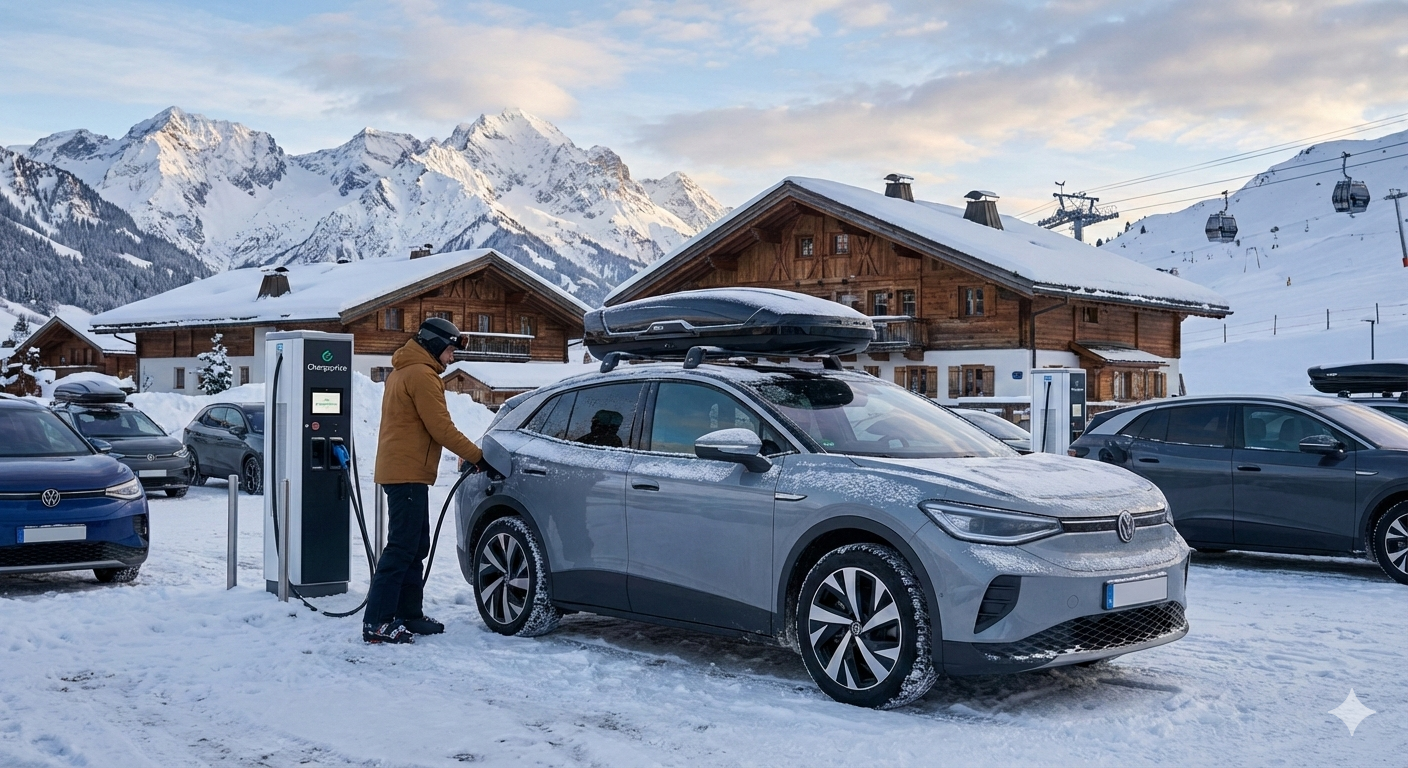
The 2026 winter season is here. While charging infrastructure across the Alps continues to expand, the number of electric vehicles in ski resort parking lots is hitting record highs. If you want to arrive relaxed and charge efficiently, you need more than just winter tires this year: you need a data strategy.
Driving an EV in winter is no longer an adventure, but it does require planning. Between -15°C mornings and the hunt for a free plug after lunch, there are hurdles that—with the right insights from Chargeprice—become mere footnotes to your trip.
Batteries rely on electrochemistry. At freezing temperatures, ions move more slowly through the electrolyte, increasing internal resistance. The ideal operating range is between 20°C and 25°C.
In ski resorts, charging spots are premium real estate. Many operators have introduced blocking fees (blocked-bay fees), which often kick in after 4 hours of AC charging. If you plug in at 09:00 AM, you might start paying extra by 01:00 PM—while you’re still miles away on the slopes.
A frozen battery charges extremely slowly (often called “Coldgate”).
Winter 2026 proves that while the hardware (chargers) is available, the software (price transparency) makes the difference. Whether you are navigating the French Alps or the Austrian Steiermark, a quick check in the Chargeprice app saves more than just money—it saves time for what really matters: the perfect descent.
[Plan your route and check charging tariffs for your ski destination in the Chargeprice App now]
Background & Data Sources (For Editorial):
 Français
 English
 Deutsch